
Running a Sex Offender Check in El Paso County
The Texas Public Sex Offender Registry is the main public search for El Paso County. Texas DPS manages the data, while the local registration authority collects and verifies required details. The state search works without a paid account. It supports a known-person search and a place-based search, so the best starting mode depends on the question.
Use a name search when you have a reliable identity. Compare aliases, age or date of birth, physical details, and the registration agency before treating a result as a match. Use an address, ZIP, county, or radius for community awareness. A radius can cross the county line, while an El Paso County filter can omit a close address just outside the border. Either result is a lead that should be read with the profile dates and status.
El Paso County Name or Address Search
Name and geographic searches answer different questions. A name search can find an identified registrant even if that person has moved within Texas. Spelling, aliases, timing, and public-disclosure rules can still affect the result. A geographic search shows public registrations tied to the entered place and selected radius. It does not prove that every person found lives within El Paso County, because the circle may cross a jurisdiction line.
The DPS search interface shown here separates those paths and offers map or list controls.
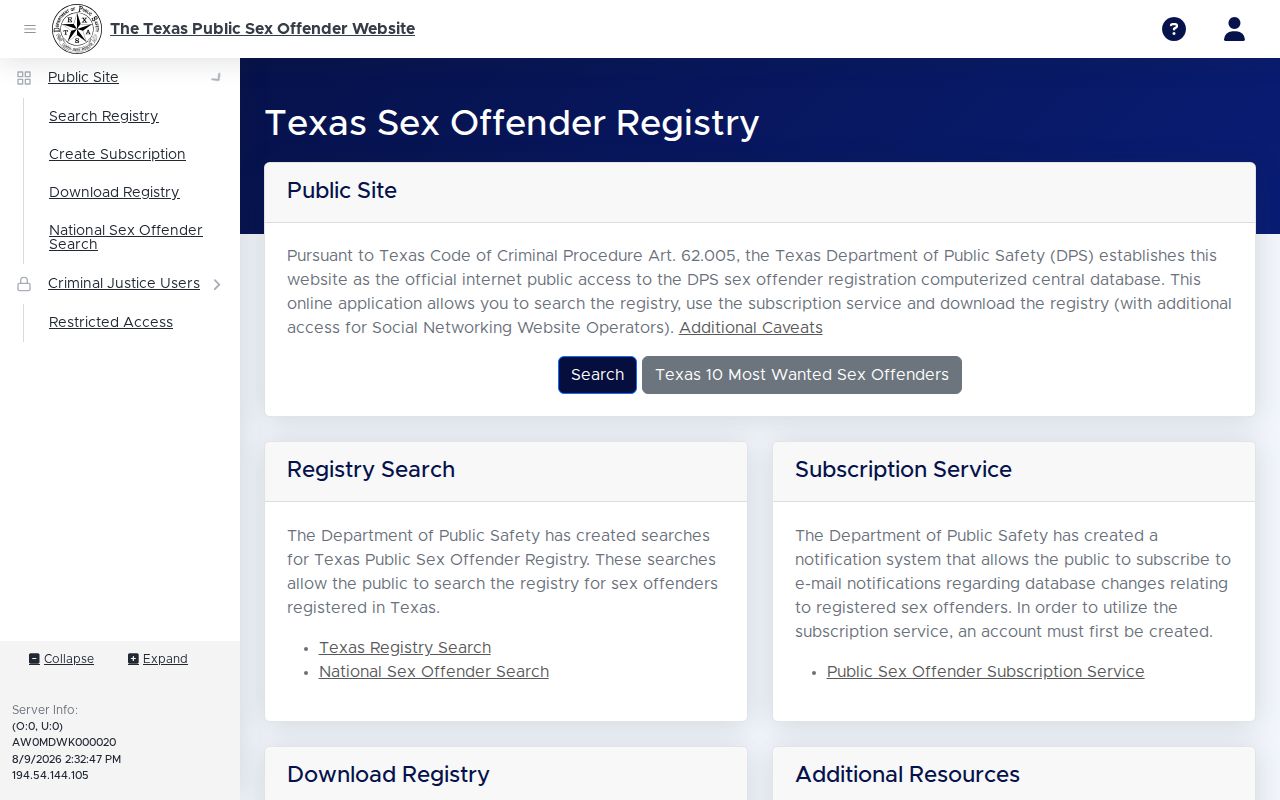
The screen makes the key choice clear: identify a known person with name fields, or define an El Paso County area with location fields. Avoid combining weak facts until they appear to confirm a person. Similar names alone are not fingerprint identification.
Searching the Texas Public Sex Offender Registry
Begin with the smallest set of facts you trust, then narrow only when needed. The portal can change its layout, and DPS may adjust radius options, but the verified core fields remain useful for an El Paso County registry search.
- Open the DPS registry and read its conditions of use before searching.
- Choose name mode for a known identity or geographic mode for an address-based check.
- Enter El Paso as the county when county boundaries matter, then review the map or result list.
- Open a likely profile and compare identifiers, status, offense, address, registration agency, and verification date.
| Field Label | Type | Required | Notes |
|---|---|---|---|
| Last / First Name | Text | Search-mode dependent | Used for a known identity; partial behavior follows portal help. |
| Address | Text | Geographic mode | Sets the center point for a place search. |
| City / County | Text or dropdown | No universal requirement shown | Select El Paso County when the county border matters. |
| ZIP | Text | No universal requirement shown | Uses a five-digit geographic filter. |
| Radius | Dropdown | Geographic mode | Use the live distance choices displayed by DPS. |
| Search / Clear; Map / List | Controls | Not applicable | Switch presentation without treating the map as a risk score. |
Keep a case note of the mode and filters used. That makes a later El Paso County check easier to repeat if DPS updates an address or verification field.
El Paso County DPS and NSOPW Searches
DPS is the controlling Texas portal. The National Sex Offender Public Website adds a cross-state search across participating United States jurisdictions. That second pass has special value in a border county when a prior residence may be in another state. It does not supply Mexican registry coverage, and it cannot turn a missing result into proof that no registration duty or relevant history exists.
The national search interface pictured here provides the broader jurisdiction layer.
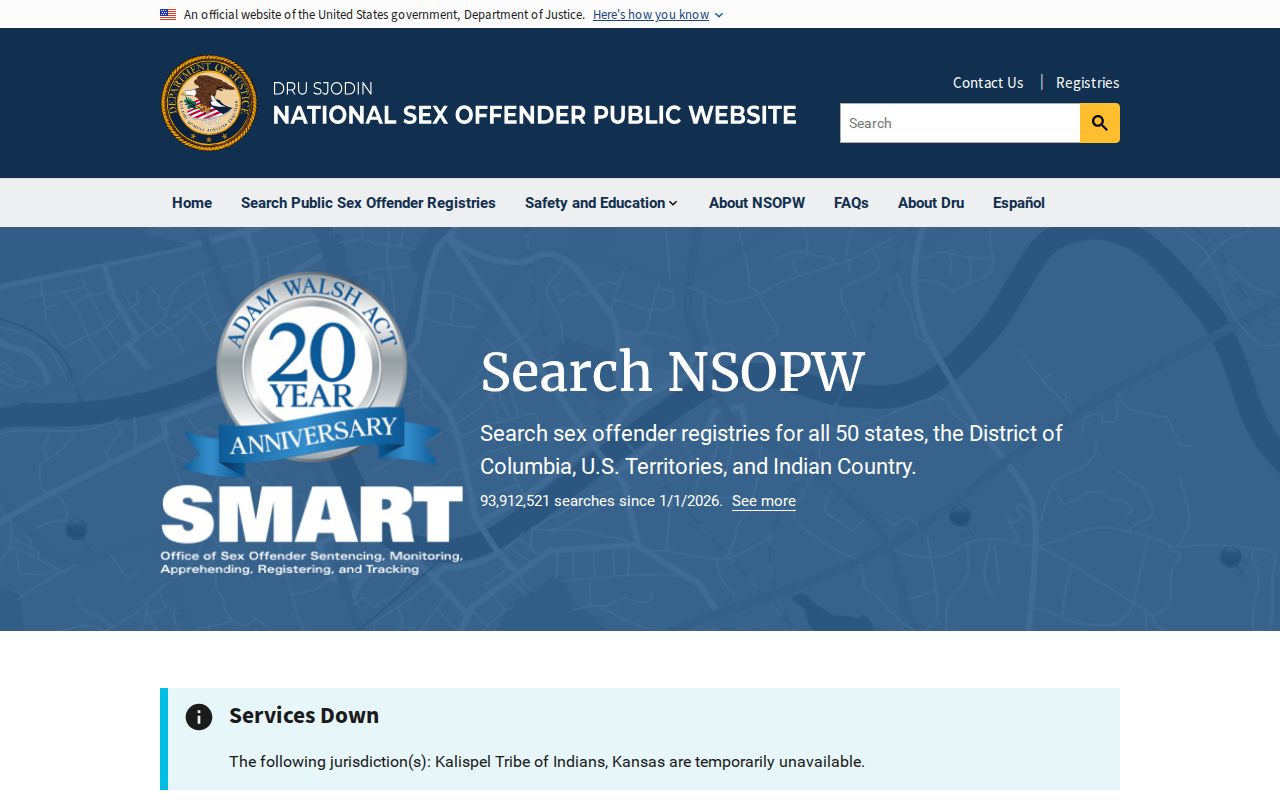
Use NSOPW after, not instead of, the Texas search. Differences may arise from legal disclosure rules, reporting time, spelling, or a move. Confirm a Texas profile through DPS and direct questions about a suspected local error to the registration authority.
What a Registry Profile Shows
A public Texas profile combines identity cues with registration facts. It may show a current photograph, aliases, physical traits, address information, the registering agency, reportable offense, conviction jurisdiction, vehicle details, public school or work fields, and the latest verification information. Some fields depend on what Texas law permits DPS to display. The profile is not a full criminal-history report, a court case file, or a forecast of conduct.
| Name & Aliases | Reported name forms used to distinguish a likely match. |
|---|---|
| Photo & Description | Current photograph plus sex, race, age or birth data, height, weight, hair, eyes, and marks when public. |
| Registered Address | Primary and secondary location details as Texas law allows them to appear. |
| Offense & Statute | Reportable offense, legal citation, adjudication or conviction date, and jurisdiction. |
| Vehicles & Other Fields | Vehicle make, model, year, color, and plate plus other public registration data where applicable. |
| Status & Verification | Compliance or registration status, responsible agency, and the date fields used to judge freshness. |
Victim information appears only in the limited categories Texas law permits. Do not use those fields to identify or contact a victim.
Reading El Paso County Registry Fields
Read a profile as a dated record. Start with the identity block, then the registration authority and status. Next, compare the displayed address and verification date. Photographs and addresses can change, and an old verification date may explain why a place seems wrong. The offense field describes the conviction or adjudication that creates the duty. It does not state that a new offense occurred at the listed address.
The DPS profile layout captured without a private identity shows how those groups fit together.
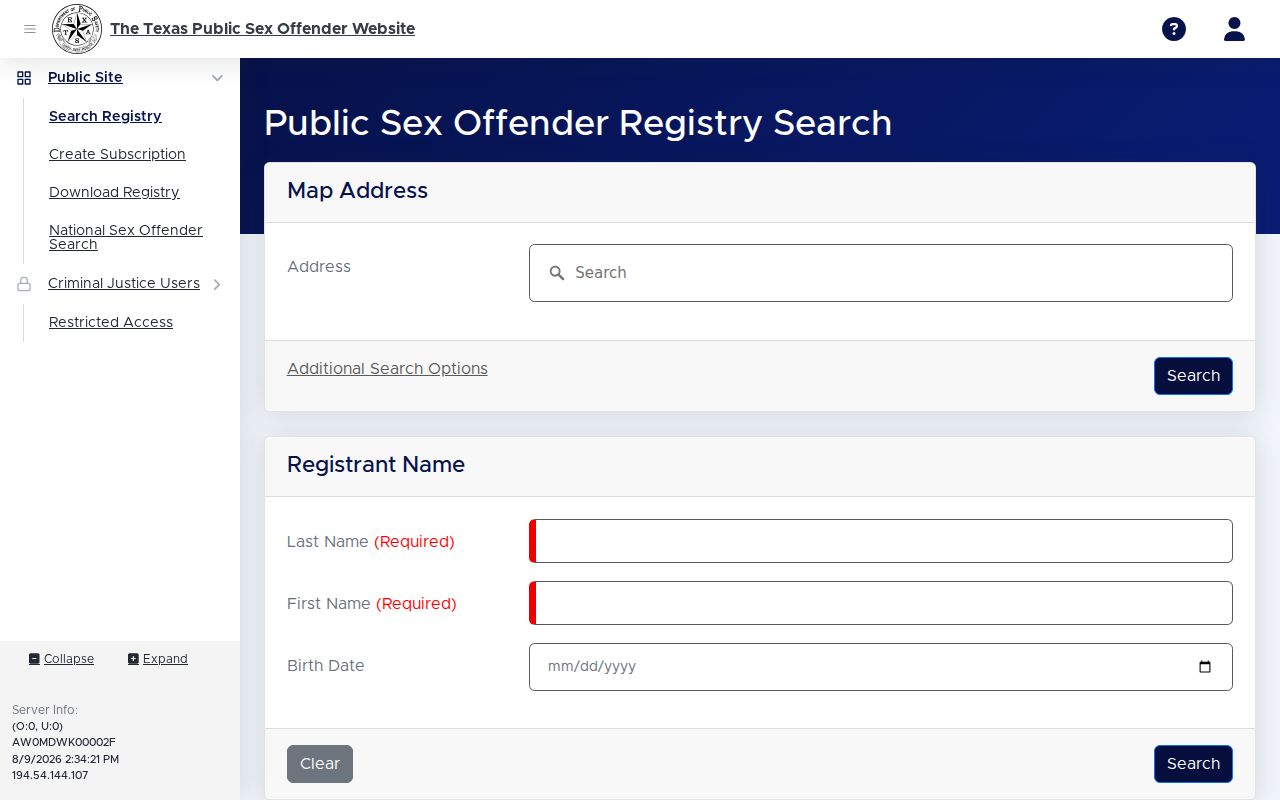
The grouped layout helps prevent a common mistake: treating one field as the whole record. Status, offense, address, and verification details should support one another. If they do not, save the public record details and contact the listed authority rather than visiting the address.
Registration Requirements and Levels in Texas
Texas does not use a simple public low, medium, and high risk-tier ladder to set every duty. Code of Criminal Procedure Chapter 62 ties registration to the reportable offense, the governing statutory category, and the person’s case history. Adult duties commonly last ten years or life. The start point for a ten-year term follows the applicable release from confinement or discharge from supervision rule, not merely the conviction date.
| Texas Chapter 62 basis | Common duration | How to verify |
|---|---|---|
| Reportable offense placed on the ten-year schedule | Ten years after the applicable release or discharge point | Match the exact offense and case dates to the current statute. |
| Enumerated offense carrying a lifetime duty | Life | Confirm the conviction statute and Chapter 62 schedule. |
| Repeat or other statutory lifetime category | Life when Chapter 62 so provides | Review all qualifying judgments, not a generic tier label. |
| Verification schedule | Frequency varies by statutory status | Confirm through the registration authority and current law. |
Federal SORNA tiers describe federal minimum standards. They should not be relabeled as Texas public risk levels. The exact judgment and current Chapter 62 text control any duration analysis.
Correcting El Paso County Registry Concerns
An apparent address error can reflect a recent move, verification timing, a map issue, or a true reporting concern. First reopen the DPS profile and check its status, registering agency, address type, and verification fields. Repeat the name search to make sure the correct profile is open. If the person may have moved from another state, compare the public result through NSOPW.
Then contact the registration authority shown on the profile. State the field that appears wrong and the reason for concern. Do not publish a home address, visit the property, or attempt to investigate a registrant. Law enforcement can compare public information with nonpublic registration records and decide whether follow-up is needed. An absence from the El Paso County results can reflect spelling, timing, jurisdiction, or legal disclosure limits; it is not proof that a person has no relevant history.
Note: Registry information supports awareness and careful verification, but it does not measure present danger or replace a call about an urgent threat.
Lawful Use and Community Notification
The Texas registry serves public awareness and safety planning. Use the data to understand which registrations Texas law makes public, to compare profile details, and to contact the proper authority about a suspected error. Never use a result to threaten, follow, shame, or intimidate a registrant or anyone at a listed address. A profile can be incomplete or stale, and a name match can be wrong.
DPS’s Sex Offender Registration Program explains the state framework. Community notification and public display operate within Chapter 62, but enforcement remains a law-enforcement task. Neighbors should not take action against a person based on a search result.
Registry misuse warning: Texas DPS warns that using registry information to injure, harass, or commit a crime can bring criminal or civil consequences under Chapter 62 and other Texas law. Do not confront a registrant, visit a listed home, discriminate unlawfully, or direct harassment at a registrant or household.