
Criminal Cases in the El Paso County Courts
El Paso County splits criminal jurisdiction by charge level. Texas District Courts hear felonies, and the District Clerk Criminal Division keeps those case files. The county lists criminal jurisdiction in the 34th, 120th, 168th, 171st, 205th, 210th, 243rd, 327th, 346th, 384th, 409th, and 448th District Courts, plus Criminal District Court No. 1. Assignments can change. A case number and assigned court on the live docket are safer than an old court list.
County Criminal Courts at Law 1 through 4 and other designated County Courts at Law handle Class A and B misdemeanors. The County Clerk is the file custodian for those cases. Municipal and justice courts keep their own fine-only Class C matters. Thus, a citation in El Paso Municipal Court may never appear as a county criminal case. The charging document identifies what was actually prosecuted: an indictment for a grand-jury felony, an information filed by a prosecutor, or a complaint that begins or supports a charge.
El Paso County Court Systems Split
The official El Paso County Records Search hub routes users to county criminal cases, jail records, bonds, warrants, and re:SearchTX. Those choices are not different views of one master file. The county criminal portal reaches local District Clerk and County Clerk dockets. El Paso FullCourt covers municipal citations and fine-only city cases. re:SearchTX adds a statewide court layer, but access and document images vary by participating court and user role.
The official re:SearchTX interface shows how the state search begins. It can help locate a court and case before the reader requests a filed instrument or judgment from El Paso County.
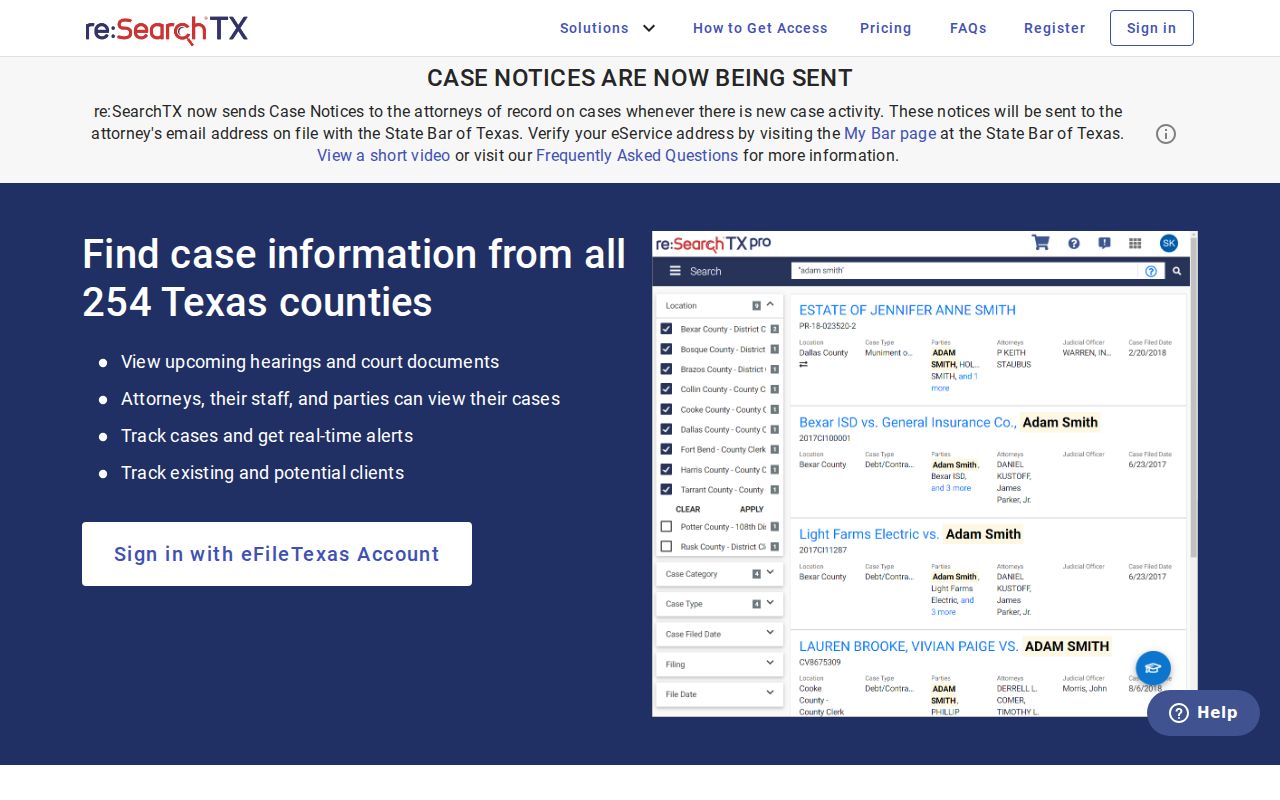
A statewide result is a route to the court record, not a substitute for a certified El Paso County copy. Older paper files, restricted images, a reporting delay, or a court that limits remote access can leave the online view short of the full file.
How to Search Case Records
Start with the county criminal search when the alleged offense is a felony or Class A or B misdemeanor. Search by exact case number when known. For a name search, begin with the surname, then add first name, middle name, date of birth, court, or filing dates to narrow common results. CAPTCHA and high traffic can delay access. A blank screen should lead to a clerk call, not a claim that no El Paso County case exists.
- Open the county Records Search hub and choose Criminal Cases.
- Select party or case-number mode, then enter the strongest known identifier.
- Check the court, filing date, charge, and case number before treating a name hit as a match.
- Open the docket and read each count, event, plea, and disposition on its own.
- Ask the District Clerk for a felony copy or the County Clerk for a misdemeanor copy when the needed image is absent.
| Field Label | Type | Required | Notes |
|---|---|---|---|
| Last Name | Text | Usually for party search | Test exact spelling and known variants. |
| First Name | Text | Optional or unspecified | Helps narrow a common surname. |
| Middle Name | Text | Optional | A blank field does not mean none exists. |
| Date of Birth | Date | Portal dependent | Use the displayed date format. |
| Case Number | Text | Alternative | Keep the court and year sequence. |
| Court or Date Filed | Select or date range | Optional | Separates clerk and filing periods. |
Missing El Paso County Court Documents
An online docket can list a filing without displaying its image. The District Clerk Criminal Division stores felony files, handles new pleadings, works with the Jail Magistrate, issues warrant numbers, and supplies clerks to the district courts. It also accepts file and copy requests. Give the clerk the exact case number, document title, and filing date when possible. Ask whether a plain copy, certified copy, clerk's record, or in-person file review fits the need.
The District Clerk is at the Enrique Moreno County Courthouse, 500 E. San Antonio Avenue, El Paso, Texas 79901, and publishes 915-273-3534. The County Clerk, reached at 915-273-3532, handles misdemeanor files. Card payments on the District Clerk service carry a 2.50 percent credit charge with a $2 minimum, or a $2.95 debit charge. Those processor charges are not the copy fee. Confirm the current plain or certified-copy rate before ordering.
Note: A docket summary may aid research, but only the clerk can issue an authenticated copy from the El Paso County case file.
What the Case File Shows
A criminal court file focuses on one prosecution, not the whole criminal history of a person. Its header links the case number to the assigned El Paso County court and filing date. The charge area may list several counts, each with its own statute, class, plea, and result. The event list then records pleadings, settings, motions, warrants, hearings, orders, judgment, and sentence. Financial entries can separate a fine, court costs, payments, and balance, while bond and restitution remain distinct concepts.
| Case Number & Court | Identifies the local docket, clerk division, assigned court, and case sequence. |
|---|---|
| Charging Document | Shows the complaint, information, or indictment and each filed count. |
| Docket Entries | Dates pleadings, motions, settings, warrants, pleas, orders, and other events. |
| Hearing Dates | Lists scheduled or recorded proceedings, subject to later court changes. |
| Disposition & Judgment | Shows how each count ended, such as dismissal, acquittal, deferred adjudication, or conviction. |
| Sentence & Conditions | Records jail or prison terms, community supervision, fines, costs, or other court orders. |
Read El Paso County Dispositions
“Disposed” is an administrative status, not a synonym for convicted. Read the result attached to every count. One charge may be dismissed while another ends in deferred adjudication or conviction. A no-bill means the grand jury declined to return an indictment. An acquittal is a not-guilty determination. Nolle prosequi means the prosecutor formally chose not to proceed. None of those outcomes should be collapsed into one broad label.
- Disposition
- The way a specific charge ended.
- Deferred adjudication
- Texas community supervision without an immediate finding of guilt, subject to terms.
- Capias
- A court writ ordering custody, often after an event in the case.
- Docket
- The dated, sequential record of filings and court events.
- Judgment
- The signed court record that states the legal outcome and sentence.
The signed charging instrument and final order carry more weight than a short portal label. When two screens disagree, request those documents from the proper El Paso County clerk. The El Paso County arrest history may explain the booking that began the trail, but it cannot establish the court result.
Stages of a Criminal Case
After an arrest or citation, a prosecutor decides whether and what to file. Felony prosecution may proceed through a grand-jury indictment. Misdemeanors often use a complaint and information. Arraignment addresses the charge and plea. Pretrial entries can show counsel, discovery disputes, motions, settings, bond issues, and negotiations. The case then reaches a plea, trial, dismissal, or another lawful outcome. A conviction leads to judgment and sentencing, while later motions or an appeal create more entries.
Case flow: Charges Filed › Arraignment › Pretrial › Plea or Trial › Disposition › Sentencing
Magistration is earlier and narrower. It covers warnings, probable cause, counsel, and release or bond conditions soon after arrest. It does not decide guilt. That is why a magistrate record or jail bond entry should not be read as the final El Paso County criminal case result.
El Paso County Downtown Record Corridor
The glass Enrique Moreno County Courthouse and the Downtown Detention Facility form a close records corridor, but each office still has its own legal file. The courthouse holds the two criminal clerks and trial courts. The downtown jail at 601 E. Overland Avenue houses a District Clerk location for search-warrant filing, with 915-273-3148 published for that function. A jail record, a magistrate event, and a clerk docket can therefore arise within a small area without becoming one document.
The county's courthouse entry instructions illustrate the public approach through parking, Liberty Hall, and security screening.
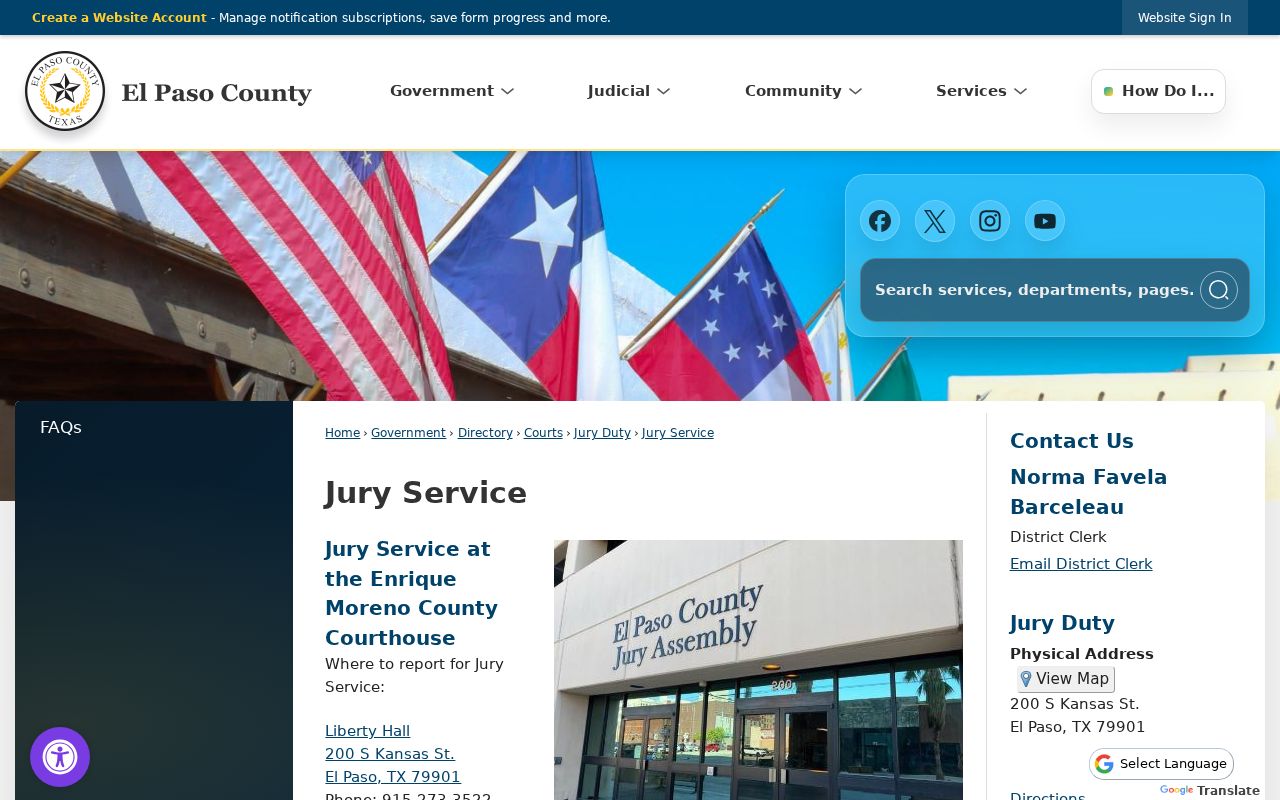
Records visitors pass magnetometer screening and should confirm the specific clerk counter's schedule before travel. The research found no universal public locker or cell-phone rule, so visitors should not rely on one.
Access & Restrictions
Texas court records are presumptively open, but access remains subject to statute, court rule, redaction, sealing orders, and the type of record. Government Code section 552.021 states the general public-access rule. Texas court-record principles and Rule 76a also support open filed records, while protected identifiers, victim or minor information, juvenile matters, expunged records, and nondisclosed material can be withheld or removed from public view.
Online redaction does not imply that the whole court file is sealed. Ask the custodian what can be inspected or copied. Likewise, a missing result can reflect lag, an older file, a name mismatch, a different clerk, or a lawful restriction. Chapter 55A governs Texas expunction, while Government Code Chapter 411 governs orders of nondisclosure. The two remedies differ, and neither should be inferred from a record vanishing from one portal.
El Paso County Case Help
The District Attorney, Public Defender, and clerks play different roles. The District Attorney prosecutes state cases and keeps its own office records, but the filed criminal docket belongs with the District or County Clerk. The Public Defender represents eligible people whom a court appoints. It is not a public court-record request desk.
The county's Public Defender office page identifies the office at 500 E. San Antonio Avenue, Suite 501, with phone 915-273-3536 and weekday hours from 8 a.m. to 5 p.m.
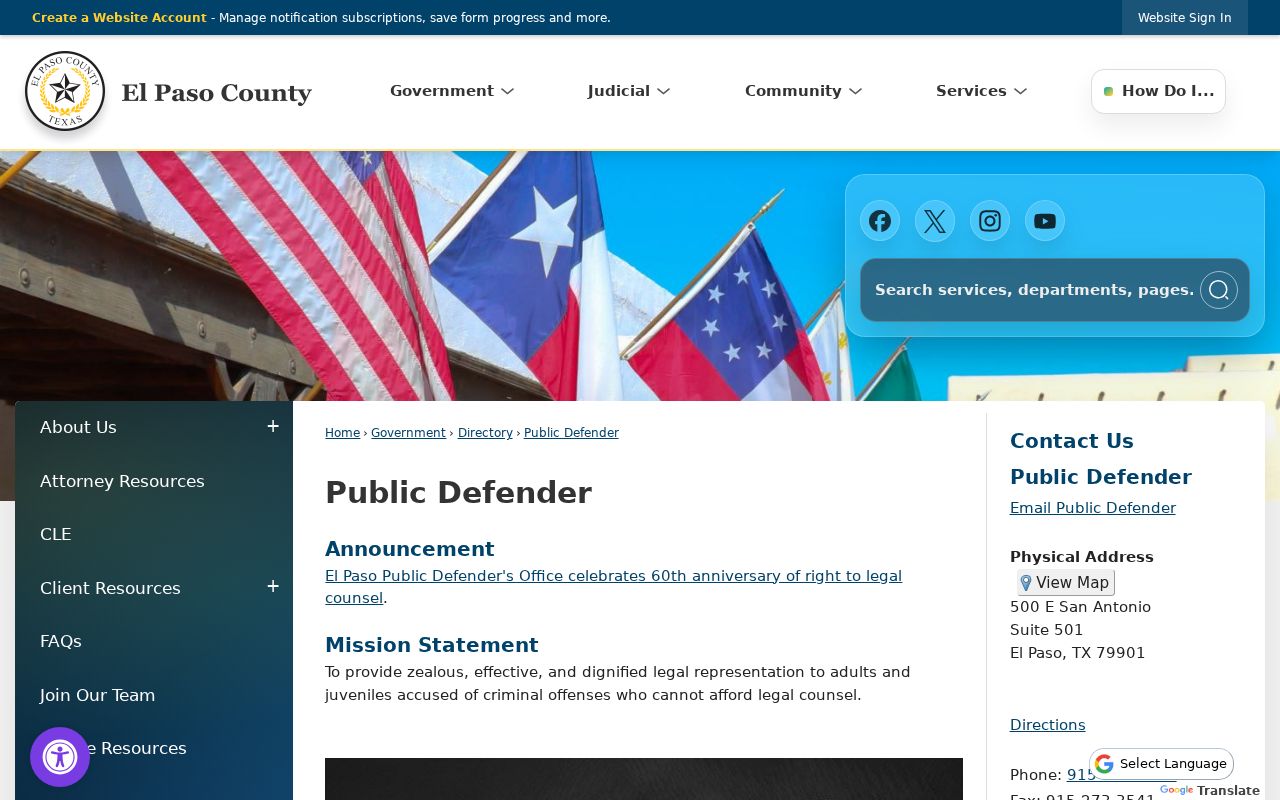
That contact is useful for appointed representation questions. A reader seeking an El Paso County indictment, docket entry, judgment, or certified sentence should still contact the clerk that holds the case.